When organizations speak about adopting AI, the conversation often gets directed towards tools, models indicating towards quick wins.
But in reality, most AI initiatives fall into two very different categories.
The first are AI-native initiatives systems and services designed with AI at their core from day one. Here, AI is not an add-on; it fundamentally shapes how decisions are made, how workflows are structured, and how value is delivered.
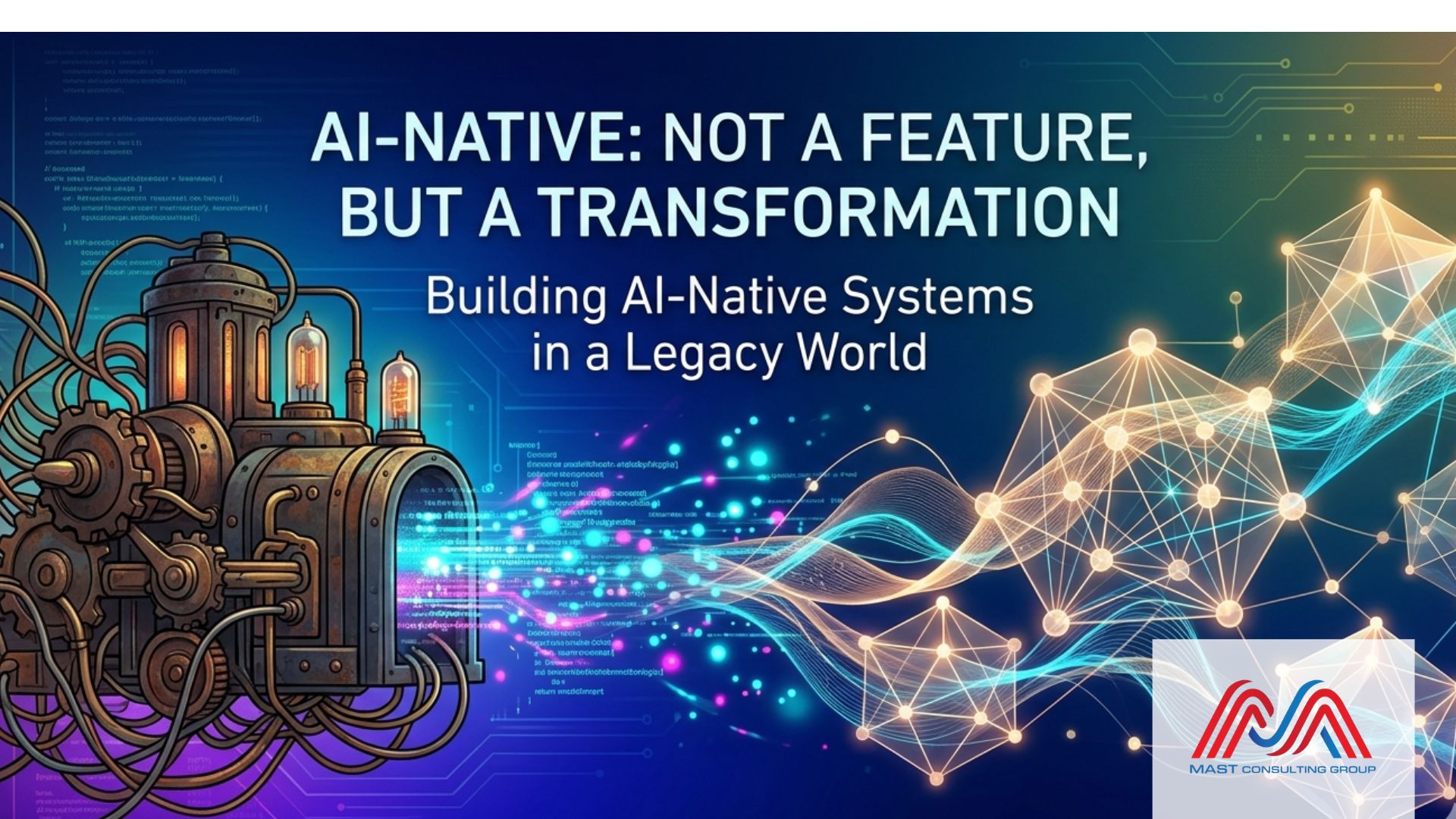
The second are AI-enabled transformations — where AI capabilities are introduced into existing, often legacy, workflows.
While the later approach may seem faster, it is inherently more complex.
Retrofitting AI into fragmented processes, siloed data environments, and rigid governance structures often leads to suboptimal outcomes.
In many cases, what is labeled as “AI transformation” risks becoming little more than advanced automation — improving efficiency at the margins without fundamentally rethinking how the system operates.
And this is where most organizations get it wrong.
The challenge is not building AI-native systems from scratch. The real challenge is transforming legacy ecosystems into AI-native operating models — without disrupting what already works.
Because the truth is — most organizations are not starting from zero!
They are starting from complexity.
In government ecosystems such as the UAE, where services operate at national scale and directly shape citizen experience, this shift is not optional — it is foundational and sensitive
So how do organizations move from legacy to AI-native?
Not through isolated pilots. Not through tools layered on top and calling it automation
But through a deliberate, phased migration.
A practical path to AI-native transformation
1. Build the foundation Stabilize the core — clean data, standardized processes, API readiness, and secure, scalable infrastructure. Without this, AI will amplify inefficiencies, not solve them.
2. Introduce AI-assisted capabilities Start where AI augments human decision-making — copilots, search, summarization, service guidance. Low risk, high learning.
3. Redesign workflows around AI Move beyond assistance. Re-engineer journeys, approvals, and service logic so AI becomes part of how work actually happens.
4. Orchestrate across systems and channels Connect AI with enterprise data, workflows, and user touchpoints. Break silos — enable end-to-end intelligence, not isolated use cases.
5. Embed governance and trust Scale responsibly — with clear frameworks for explainability, oversight, privacy, and risk. Without this, scale introduces exposure.
6. Operate as AI-native by design At this stage, AI is no longer an initiative — it becomes the default. Services, teams, and decisions are designed with AI from the outset.
To Conclude, The shift is subtle, but critical.
AI-enabled organizations optimize what exists. AI-native organizations redefine how things work.
And the difference between the two is not technology- It is intent, architecture, and execution discipline.
The question is no longer whether to adopt AI- It is whether we are willing to rethink our systems deeply enough to make AI truly matter.
Because in the end, AI will not transform organizations — well-designed systems will.
Ready to begin your AI-native transformation?
MAST Consulting helps organizations move from fragmented AI adoption to true AI-native transformation. Reach out to our team to explore how we can support your strategy, governance, and implementation journey.